Why an intercooler and when the factory one stops being enough
The power drop after the third pull is not the turbo's fault. It is the intake air temperature — and you can measure it before spending money on a new cooler.
Compressing air raises its temperature. At around 1 bar of boost, the air leaving the turbo often reaches 120–150°C. Hot air is less dense, so less oxygen reaches the cylinder — and much of the turbo's work goes to waste.
What an intercooler actually does
It cools the air between the turbo and the intake manifold. Three effects, in order of importance:
- denser air — more oxygen at the same pressure, which means genuinely more power,
- lower risk of knock — the ECU does not have to retard the ignition, so it does not quietly take power away,
- repeatability — the second and third pull look the same as the first.
That third point matters most in practice. The factory cooler usually copes with a single hard pull. The trouble starts with a series of them.
When the factory one stops being enough
Do not guess — measure. Logging two parameters is enough: intake air temperature (IAT) and ignition timing correction.
- Warm the car up to operating temperature.
- Do three pulls under load, with short breaks between them.
- Compare the IAT at the end of the first and the third pull.
| IAT rise above ambient temperature | Conclusion |
|---|---|
| up to 15°C | cooling is fine, look for power elsewhere |
| 15–30°C | borderline; with a stronger map a replacement is worth considering |
| above 30°C | the cooler cannot keep up, power leaks away with every further pull |
If at the same time you see the ignition retarded by a few degrees, you have the full set of evidence — the ECU is protecting the engine against knock at the cost of power.
Bar and plate or tube and fin
- Bar and plate — a core made of plates and fins, heavy, with a large thermal capacity. It heats up more slowly and gives off heat more slowly. It works well with short, intensive runs: track, sprint.
- Tube and fin — lighter, gives off heat to the passing air more quickly. Better for long drives under steady load and where airflow to the front end is limited.
There is no single answer here. What counts is how the car is used — and how much room there really is behind the bumper.
What not to do
- Do not buy the largest one that will fit. Excessive internal volume lengthens the time it takes to build pressure — the car responds to the throttle with a delay.
- Do not block the water radiator or the air conditioning condenser. A heat exchanger placed in front of them without a well thought-out airflow raises coolant temperatures and breaks more than it fixes.
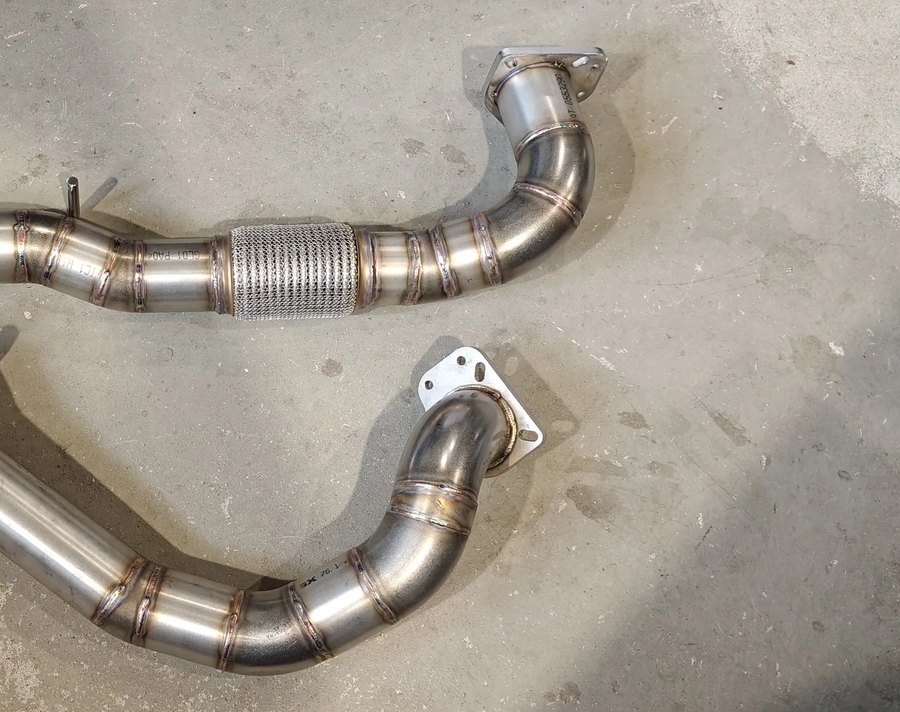
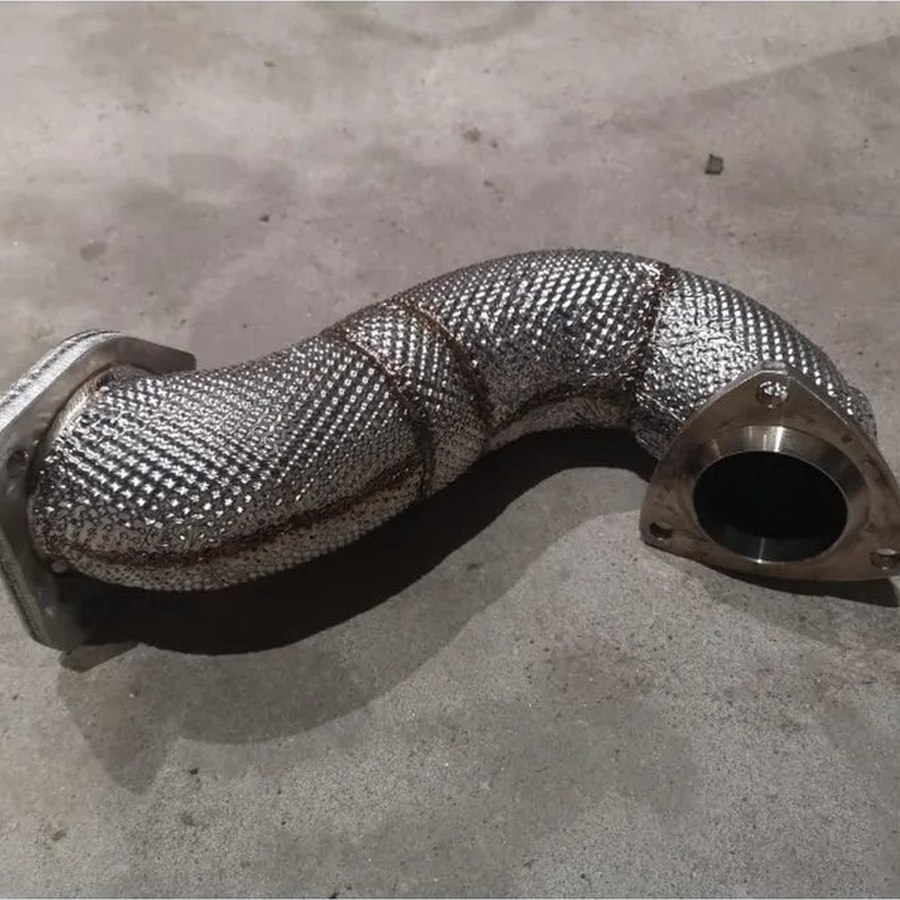
- Do not leave random piping in place. Sharp elbows and poor sealing can wipe out the entire gain from a better core.
What else is worth doing at the same time
- Replace the clamps with screw clamps with a spring ring — at higher pressure the ordinary ones can let a hose go.
- Check the whole intake for leaks; a leak shows up exactly like poor cooling.
- Tidy up the airflow through the front end — sometimes two guide plates do more than a more expensive core.
The intercooler is the component where measuring before you buy saves the most money. If you like, send us your IAT logs — we will tell you whether a replacement makes sense on your car.